DBD Cases in West Jakarta Decline Thanks to Betta Fish
Reported by TP Moan Simanjuntak | Translated by Rini Elvira
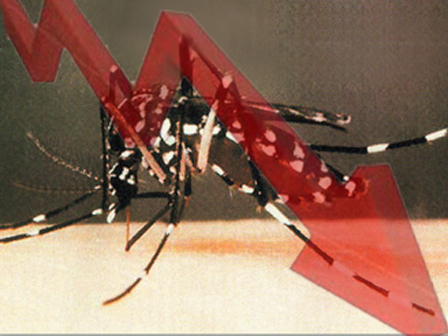
Had been rocketing in March and April, the amount of dengue fever (DBD) patients in West Jakarta now decreases significantly after local Health Sub-Department implemented betta fish empowerment program. Aside rampantly doing mosquito nests eradication (PSN) and socializing 3Ms (mengubur–burry, menguras–drain, menutup–close), betta fish program is claimed able to press the growth of aedes aegypti mosquito.
Starting this year we also spread betta fish into aquariums, bath tubs, and water reservoir pools because it has the ability to eat mosquito larvae quickly
“Besides PSN and 3Ms programs for dengue fever prevention, starting this year we also spread betta fish into aquariums, bath tubs, and water reservoir pools because it has the ability to eat mosquito larvae quickly. Thus, since we encourage betta fish spreading activity, there is decline in dengue fever cases,” stated Head of West Jakarta Health Sub-Department, Widyastuti, Friday (9/26).
According to Widyastuti, the betta fish empowerment program is implemented in Palmerah Sub-District. As a result, the amount of dengue fever patients there is decreasing.
DBD Killed a Boy in West Jakarta“Palmerah is the pilot for betta fish empowerment program. Dengue fever cases were the highest happened in that sub-district last year, but now have decreasing and shifted to Cengkareng Sub-District,” she uttered.
At this time, Widyastuti told that the betta fish empowerment program is targeting Kembangan Utara Urban Village that is prone to dengue fever cases.
“For sub-district, it is Cengkareng that is most prone to dengue fever cases. But for the urban village, it is Kembangan Utara. The indication of high dengue fever cases can be seen from the neighborhood and residents’ behaviors,” she explained.
Widyastuti hopes that the trend of dengue fever cases decline in West Jakarta could continue by monitoring the Free Larvae Number (ABJ) index in each neighborhood.
“We must synergize so dengue fever cases could be pressed to the maximum,” she asserted.
For information, as many as 2,102 dengue fever cases have happened in the municipality along this year. Based on West Jakarta Health Sub-Department data, it consists of January 166 cases, February 260 cases, March 364 cases, April 431 cases, May 293 cases, June 256 cases, July 159 cases, August 137 cases, and September 36 cases.